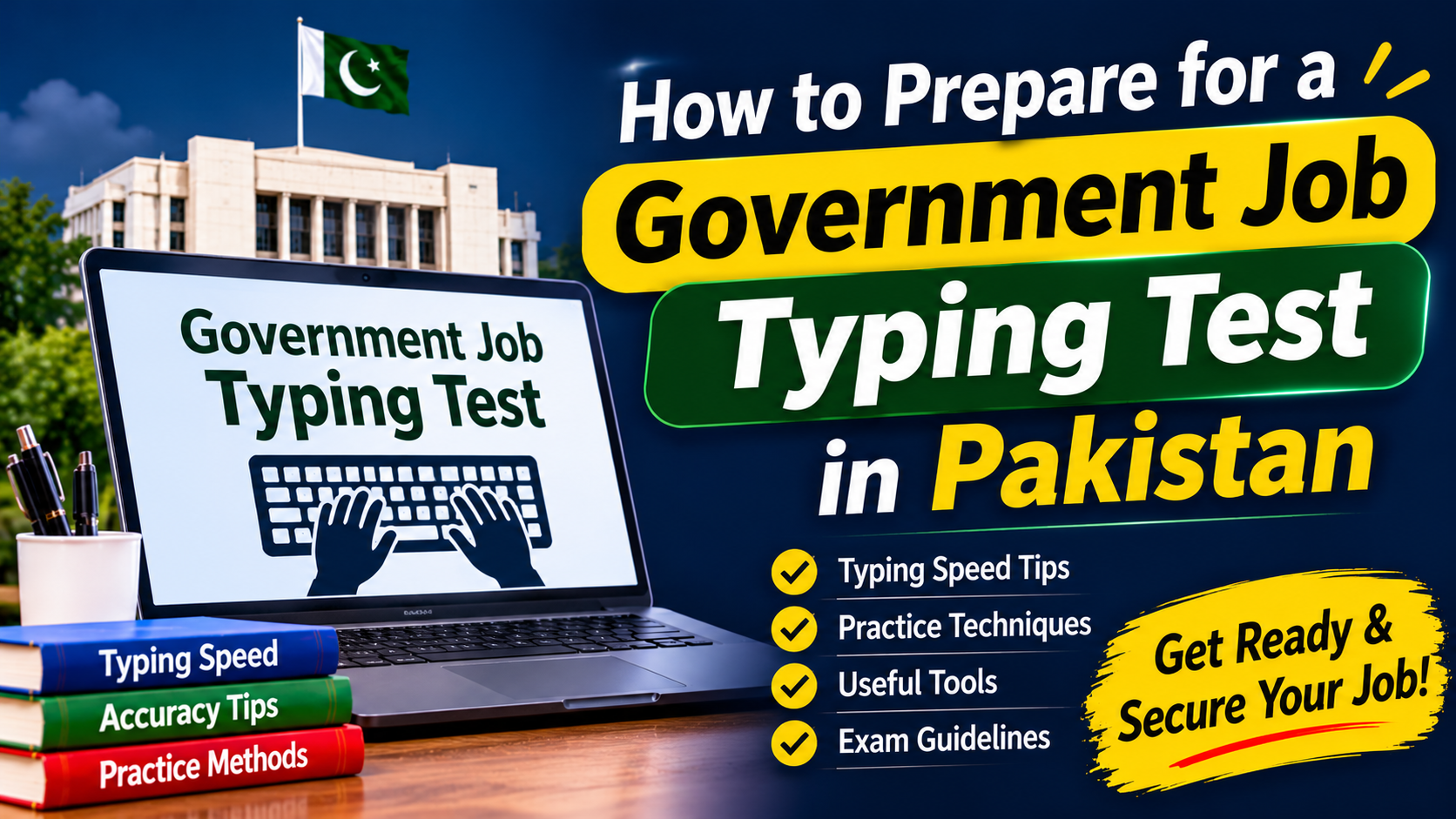
Many government and private organisations in Pakistan use computer-based tests (CBTs) to evaluate candidates during recruitment. Instead of answering questions on paper, applicants complete an examination using a computer at an authorised testing centre.
These assessments may include multiple-choice questions, subject-related problems, general knowledge and basic computer skills. For candidates who have only experienced traditional written examinations, using a computer during a recruitment test can feel unfamiliar.
However, understanding the examination process and practising with digital tests can make the experience easier. This guide explains how to prepare for computer-based job tests, manage time and avoid common mistakes.
What Is a Computer-Based Job Test?
A computer-based test is an examination in which candidates read questions and submit answers through a computer system. The test may be conducted at a designated centre or through an approved online examination platform.
In Pakistan, different recruiting organisations and testing agencies may use digital assessments for government and private-sector vacancies.
Depending on the position, an examination can cover:
- English grammar and vocabulary
- General knowledge
- Pakistan Studies
- Basic mathematics
- Analytical and logical reasoning
- Computer fundamentals
- Subject-specific knowledge
The exact syllabus and format depend on the advertised position. Therefore, candidates should always check the official instructions rather than preparing from an unrelated test pattern.
Understand the Test Pattern Before Preparing
Your first step should be to identify what the examination will include.
Read the job advertisement, recruitment notice or instructions issued by the testing organisation. Look for the following details:
Total questions: Find out how many questions are included in the examination.
Test duration: Check the available time so you can plan how quickly to answer.
Question format: Determine whether the assessment contains multiple-choice questions, written responses or practical tasks.
Negative marking: Confirm whether incorrect answers result in a deduction. Do not assume that every test follows the same marking policy.
Required documents: Review the instructions about CNIC, roll number slips and other identification requirements.
Having this information helps you prepare according to the actual examination instead of wasting time on unnecessary subjects.
Important Subjects to Prepare
Although the syllabus varies, many general recruitment assessments include a combination of common subjects.
1. English
Improve your understanding of grammar, sentence structure, vocabulary, synonyms, antonyms and reading comprehension.
Practise identifying grammatical mistakes and understanding short passages. These abilities are useful in both written and computer-based assessments.
2. General Knowledge
Read about important national and international developments, geography, basic science and well-known organisations.
Use reliable educational resources and pay attention to information relevant to the announced syllabus.
3. Pakistan Studies
Revise important historical events, constitutional developments, geography, national institutions and major milestones in Pakistan’s history.
Focus on understanding key facts rather than memorising large amounts of unrelated information.
4. Mathematics
Practise percentages, ratios, averages, fractions, basic algebra and everyday numerical problems.
Try solving questions without relying entirely on a calculator, particularly if the examination instructions do not permit its use.
5. Analytical Reasoning
These questions examine your ability to understand relationships, identify patterns and reach logical conclusions.
Practise number sequences, simple puzzles, comparisons and statement-based problems.
6. Computer Fundamentals
For positions involving office or administrative responsibilities, revise basic computer knowledge.
Important areas may include computer hardware, operating systems, file management, internet usage, email, Microsoft Office and common keyboard shortcuts.
Learn How Computer-Based Exams Work
Knowing the examination interface can reduce confusion on test day.
Most digital assessments provide an on-screen question area with options for selecting answers. Some systems also display a timer and question navigation controls.
During preparation, become familiar with these basic actions:
- Selecting an answer using a mouse.
- Moving between questions.
- Reviewing unanswered questions, if permitted.
- Changing a selected response according to the system rules.
- Submitting the examination after completing the assessment.
The interface can differ between testing providers, so follow the demonstration or instructions supplied by the actual examination centre.
Practise with Online Mock Tests
Mock examinations help candidates understand how questions appear on a screen and how to work within a fixed time.
You can use educational websites for general practice:
1. Khan Academy
Website: https://www.khanacademy.org/
Useful for improving mathematics, science and other academic concepts through lessons and exercises.
2. GCFGlobal
Website: https://edu.gcfglobal.org/
Provides beginner-friendly computer lessons covering topics such as internet usage, computer basics and office applications.
3. 10FastFingers
Website: https://10fastfingers.com/
Useful for practising keyboard control, although it is not a complete government recruitment test preparation platform.
Remember that online exercises are supplementary learning resources. They do not replace the official syllabus or guarantee that the same questions will appear in your recruitment examination.
A Practical 15-Day Preparation Plan
Candidates with limited time can organise their preparation using the following schedule.
| Days | Preparation Focus |
|---|---|
| 1–2 | Review the official syllabus and identify weak subjects |
| 3–4 | Study English grammar and vocabulary |
| 5–6 | Revise Pakistan Studies and general knowledge |
| 7–8 | Practise basic mathematics |
| 9–10 | Work on analytical reasoning questions |
| 11–12 | Revise computer fundamentals |
| 13 | Attempt a complete timed mock test |
| 14 | Review incorrect answers and difficult topics |
| 15 | Take a final practice assessment and revise key points |
Try to study for approximately one to two hours daily, depending on your existing knowledge and examination date. Consistency is more useful than attempting to cover everything in a single day.
Time Management During the Examination
A computer-based test usually has a fixed duration. Spending too long on one difficult question can affect your ability to complete the remaining sections.
Use these strategies:
Read each question carefully: Understand what is being asked before selecting an option.
Answer easier questions first: If the system allows you to move freely between questions, complete the straightforward ones before returning to difficult items.
Watch the timer: Check the remaining time periodically without becoming distracted.
Avoid random guessing: Follow the official marking instructions, especially if negative marking applies.
Review your responses: If permitted, use the remaining time to check unanswered questions and possible mistakes.
Documents and Instructions to Check Before Test Day
Candidates should prepare everything required by the recruiting organisation in advance.
Commonly requested items may include:
- Original CNIC or another accepted identification document.
- Printed roll number slip or admission notice.
- Relevant application details.
- Any additional document mentioned in the examination instructions.
Check the test centre address, reporting time and permitted items. Arrive early enough to complete the required verification process.
Do not carry electronic devices or prohibited materials into the examination hall. Follow the centre’s instructions regarding mobile phones, calculators and personal belongings.
Common Mistakes Candidates Should Avoid
Some applicants prepare their subjects but overlook the practical side of a digital examination.
Avoid these mistakes:
- Ignoring the official syllabus.
- Practising only through books without using a computer.
- Spending too much time on difficult questions.
- Failing to understand the examination interface.
- Assuming that every test has the same negative-marking policy.
- Forgetting the roll number slip or required identification.
- Depending entirely on outdated sample questions.
- Leaving preparation until the final few days.
A balanced preparation strategy should include subject knowledge, digital familiarity and regular self-assessment.
Frequently Asked Questions
Are computer-based job tests difficult?
Their difficulty depends on the position, syllabus and assessment method. Candidates who understand the subjects and practise digital mock tests can become more comfortable with the format.
Can I prepare for a CBT at home?
Yes. You can study through books, online lessons and mock tests using a computer or laptop. However, the actual assessment may use a different interface.
Is negative marking included in every computer-based test?
No. Marking rules vary between recruitment organisations. Check the official examination instructions before deciding whether to guess an uncertain answer.
What should I do if the computer stops working during the examination?
Immediately inform the examination staff or invigilator. Do not attempt to restart the system or change its settings yourself. Follow the instructions provided by authorised staff.
Can I use a calculator during the test?
Only if the examination rules permit it. Some assessments provide an on-screen calculator, while others do not allow any calculator.
Conclusion
Preparing for a computer-based job test involves more than studying the syllabus. Candidates should understand the examination format, practise using a computer, improve subject knowledge and develop effective time-management habits.
Start by reviewing the official instructions for your vacancy and then follow a realistic preparation schedule. With regular practice and careful planning, applicants can approach digital recruitment examinations with greater confidence.
Meta Description: Learn how to prepare for computer-based job tests in Pakistan with subject-wise study tips, online mock tests, a 15-day preparation plan and examination guidance.