Getting your first job can be difficult when most employers ask for previous work experience. Many students and fresh graduates in Pakistan face this situation after completing Matric, Intermediate, a diploma or a university degree. They have the required education but are unsure how to convince an employer to give them their first opportunity.
The good news is that professional experience is not the only factor employers consider. Communication skills, basic computer knowledge, practical abilities, reliability and willingness to learn can also make a candidate suitable for an entry-level position.
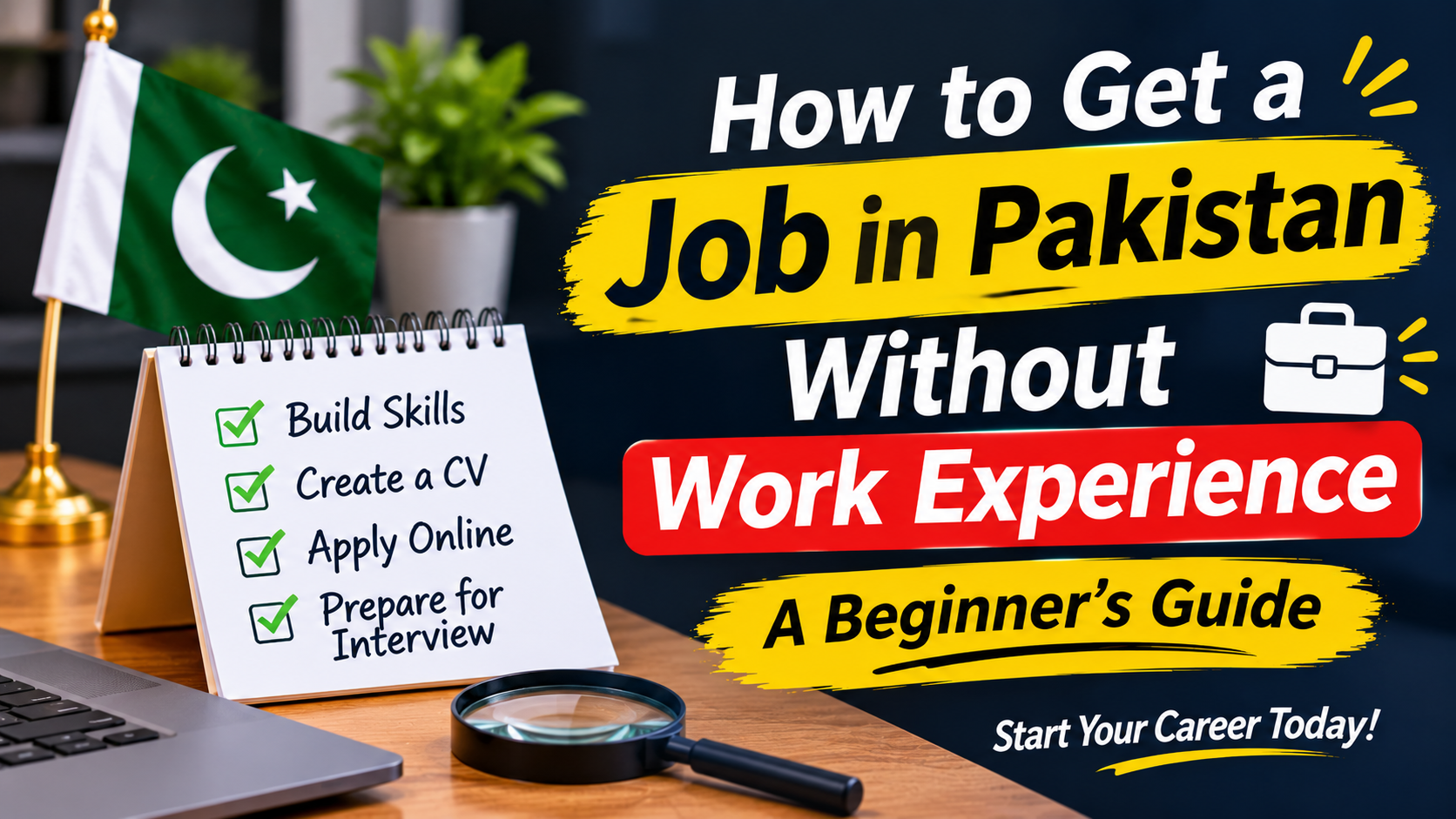
This guide explains how beginners can find employment in Pakistan, prepare for applications and improve their chances of getting hired without having a formal work history.
1. Identify Jobs That Accept Fresh Candidates
Start by searching for positions that do not require several years of professional experience. Some organisations regularly recruit beginners for training or entry-level roles.
Examples include:
- Customer Support Representative
- Office Assistant
- Receptionist
- Data Entry Operator
- Sales Representative
- Junior Computer Operator
- Content Writing Assistant
- School Teaching Assistant
- Trainee Accountant
- Retail Store Assistant
Read each vacancy carefully because requirements vary between employers. Some positions may accept Intermediate candidates, while others require a bachelor’s degree, relevant training or specific technical knowledge.
Instead of applying randomly, focus on roles that match your education and abilities.
2. Develop Skills That Employers Actually Need
When you have no employment history, your skills can help demonstrate your potential. You do not necessarily need an expensive course to begin learning.
Consider developing these practical abilities:
Computer skills: Learn Microsoft Word, Excel, PowerPoint, email management and basic internet research. These tools are useful in many office-based positions.
Communication: Practise speaking clearly, writing professional messages and explaining information confidently. Good communication is valuable in customer service, sales and administrative work.
Problem-solving: Learn how to handle everyday workplace situations, organise tasks and find solutions instead of waiting for someone else to complete every step.
Technical knowledge: Depending on your preferred field, explore graphic design, bookkeeping, digital marketing, basic programming or other relevant skills.
Choose abilities connected to the type of work you want. Learning ten unrelated skills is less useful than becoming confident in two or three that employers regularly request.
3. Create a Professional CV Without Employment History
A CV is often the first document an employer reviews. Even without previous employment, you can prepare a strong and honest profile.
Include these sections:
- Full name and contact information
- Short professional introduction
- Educational qualifications
- Relevant skills
- Academic projects or practical assignments
- Training courses and certificates
- Languages you can use professionally
For example, a fresh graduate in computer science can mention a university project, programming languages and software knowledge instead of leaving the experience section empty.
Avoid adding imaginary companies, fake job titles or unverified certificates. Employers may ask questions about anything mentioned in your CV.
Keep the document organised, easy to read and preferably one page if your background is limited.
4. Gain Practical Experience Before Your First Job
You can develop useful experience through activities that do not require a permanent position.
Some possible options include:
Internships: Apply for short-term placements in offices, schools, software companies, banks or other organisations. An internship can introduce you to professional responsibilities.
Volunteer work: Participate in genuine community projects, educational activities or nonprofit organisations. These opportunities can help develop teamwork and communication.
Personal projects: Create a small portfolio related to your chosen profession. For example, a graphic design beginner can prepare sample posters, while an aspiring writer can write original articles.
Academic assignments: University projects, research activities and presentations can demonstrate your ability to complete tasks independently.
Describe these activities honestly on your CV. An academic project should be identified as a project, not presented as paid employment.
5. Search for Entry-Level Opportunities Online
Job websites and professional platforms can help beginners discover vacancies in different cities across Pakistan.
Useful resources include:
- National Jobs Portal: https://njp.gov.pk/ — for government employment opportunities advertised through the platform.
- LinkedIn: https://www.linkedin.com/ — for professional networking and private-sector vacancies.
- Rozee: https://www.rozee.pk/ — for employment opportunities across different industries.
- Mustakbil: https://www.mustakbil.com/ — for vacancies in various professional fields.
Use search phrases such as “Fresh Graduate”, “Trainee”, “Junior”, “Entry Level” and “No Experience Required”.
You can also visit company career pages to check whether they are recruiting beginners. Always confirm that a vacancy is genuine before sharing personal documents.
6. Apply Directly to Local Businesses
Not every employer advertises vacancies on large job websites. Small businesses may recruit through local networks, referrals or direct applications.
Depending on your location, consider visiting:
- Private schools and academies
- Retail shops and supermarkets
- Clinics and hospitals
- Software houses
- Accounting offices
- Customer service centres
- Local companies and distribution businesses
Prepare a printed CV and introduce yourself politely. Ask whether they have any suitable entry-level vacancy or trainee opportunity.
If there is no opening, you can ask whether they accept CVs for future recruitment. Avoid repeatedly contacting staff or visiting workplaces where applications are not accepted.
7. Write a Short and Professional Job Application Email
When applying online, your email should be clear and relevant to the advertised position.
Use a suitable subject line, such as:
Application for Junior Office Assistant Position – [Your Name]
In the message, briefly introduce yourself, mention your educational background and explain why you are interested in the opportunity.
Attach your CV in PDF format unless the employer requests another file type. Check the recipient’s email address and attachment before pressing send.
Avoid sending the same incomplete message to dozens of organisations. A short application that addresses the actual vacancy is more professional.
8. Prepare for Your First Job Interview
An employer may ask why you should be considered when you have never worked before. Your response should be confident but realistic.
You could explain:
“I am at the beginning of my professional career, but I have developed relevant skills through my education and practical projects. I am willing to learn, follow instructions and take responsibility for my work.”
Prepare answers to common questions:
- Tell us about yourself.
- Why do you want this position?
- What are your strengths?
- Which computer applications can you use?
- How do you handle difficult situations?
- What would you like to learn in this role?
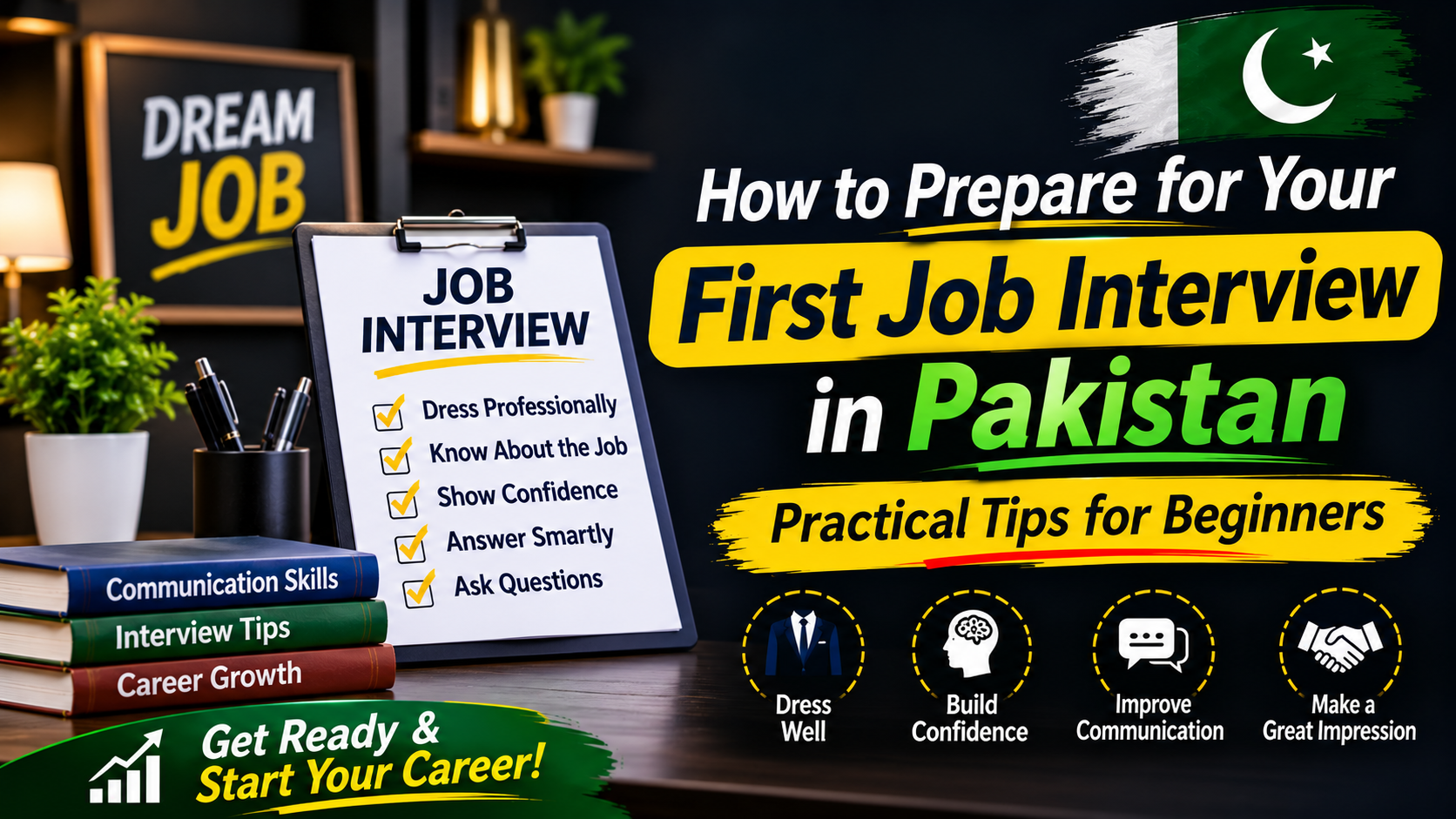
Research the organisation before attending. Wear neat clothing, arrive on time and carry copies of your CV and relevant educational documents.
Never claim expertise in a subject you cannot explain or demonstrate.
9. Be Careful of Fake Job Offers
People searching for their first employment opportunity can become targets of misleading advertisements. Some individuals demand money in exchange for an appointment letter or promise guaranteed selection.
Protect yourself by following these precautions:
- Verify the employer’s official website and contact details.
- Check whether the vacancy appears on a genuine company career page.
- Be cautious if someone demands money to guarantee recruitment.
- Do not share banking passwords, OTPs or sensitive account information.
- Read the employment terms before accepting an offer.
- Ask for written details about salary, duties and working hours.
A genuine recruitment process should provide clear information about the organisation and position. If something appears suspicious, investigate before proceeding.
10. Stay Consistent During Your Job Search
Finding a first job may take time, especially when you are competing with candidates who already have professional experience.
Create a simple weekly routine. Search for suitable vacancies, update your applications, practise interview questions and improve one relevant skill.
Keep a record of the organisations you contact and the positions for which you apply. If an employer rejects your application, consider whether your CV, communication or technical preparation needs improvement.
Do not apply for every available position simply to increase the number of applications. Focus on opportunities where you meet the basic requirements.
Frequently Asked Questions
Can I get a job in Pakistan without experience?
Yes. Many organisations recruit fresh candidates for trainee, junior and entry-level positions. The available opportunities depend on the employer’s requirements and the applicant’s qualifications.
Which jobs are suitable for fresh candidates?
Customer support, office assistance, sales, data entry, retail work and trainee positions can be suitable starting points. Some technical and professional roles also offer opportunities for beginners.
Can I apply for a government job without experience?
Yes, if the advertised position accepts candidates without previous employment. Always check the official recruitment notice for educational, age and experience conditions.
Is an internship necessary to get a job?
No. An internship is not compulsory for every position, but it can provide practical exposure and help beginners understand workplace responsibilities.
What should I include in my CV if I have never worked?
Mention your education, relevant skills, academic projects, training, certificates and volunteer activities. Keep the information truthful and related to the position.
Conclusion
Starting a professional career without previous work experience may seem challenging, but it is possible with proper preparation. Focus on suitable entry-level vacancies, develop practical skills and create a clear CV that highlights your strengths.
Use trusted employment platforms, approach local businesses professionally and prepare carefully for interviews. Your first opportunity may not be your ideal position, but it can provide valuable experience and help you build a stronger career in Pakistan.
Meta Description: Learn how to get a job in Pakistan without work experience. Discover entry-level opportunities, CV tips, useful skills, internships and practical job-search strategies for beginners.